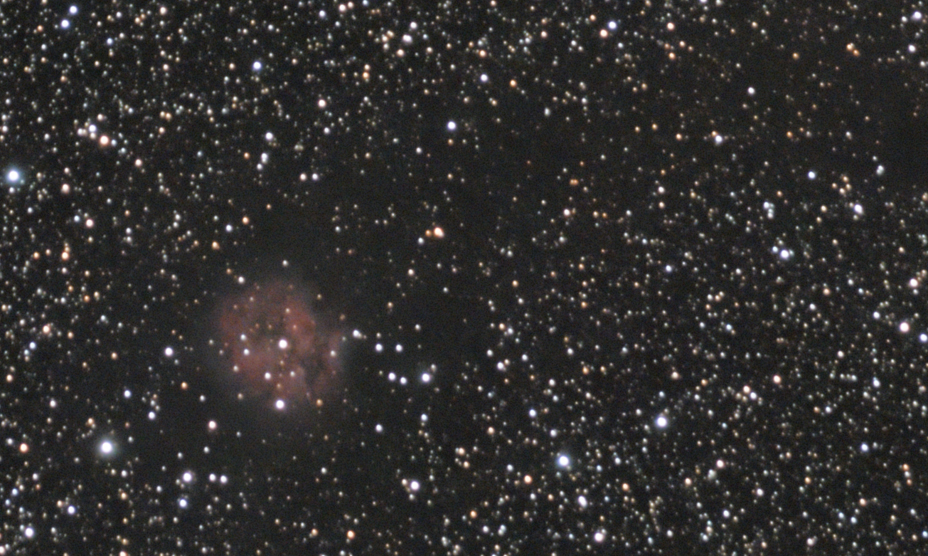
Caldwell 19 – The Cocoon Nebula
We had one of the best, clear nights in a while during the sort-of-monthly Huntsville Amateur Astronomy Society meeting at the Dominey Observatory this weekend. The HAAS meetings will likely coincide with public viewing nights going forward. It’s easier to schedule both meetings on the same night, and this gives the club members the opportunity to help out a bit.
I’ve been having a lot of fun with the Dwarf 3 Smart Telescope. It is easy to use and is surprisingly capable for its size and price point. So far, I am very impressed with it–and I still haven’t explored all that it can do.
After the public viewing session was well underway, I snuck out to one of the observing pads at the back of the observatory. A couple who had come to the public viewing was interested in the capabilities of the Dwarf 3, so they joined me, and I showed them how to set it up and start an imaging session.
Tonight’s target was Caldwell 19, more commonly known as the Cocoon Nebula. Similar to the Trifid Nebula, it is a combination of emission, reflection, and dark (absorption) nebulae. One of its distinctive features is Barnard 168, the long, dark molecular cloud that makes up its “tail.” Studies of the nebula complex have revealed hundreds of stars forming inside, making it truly a “stellar cocoon.”
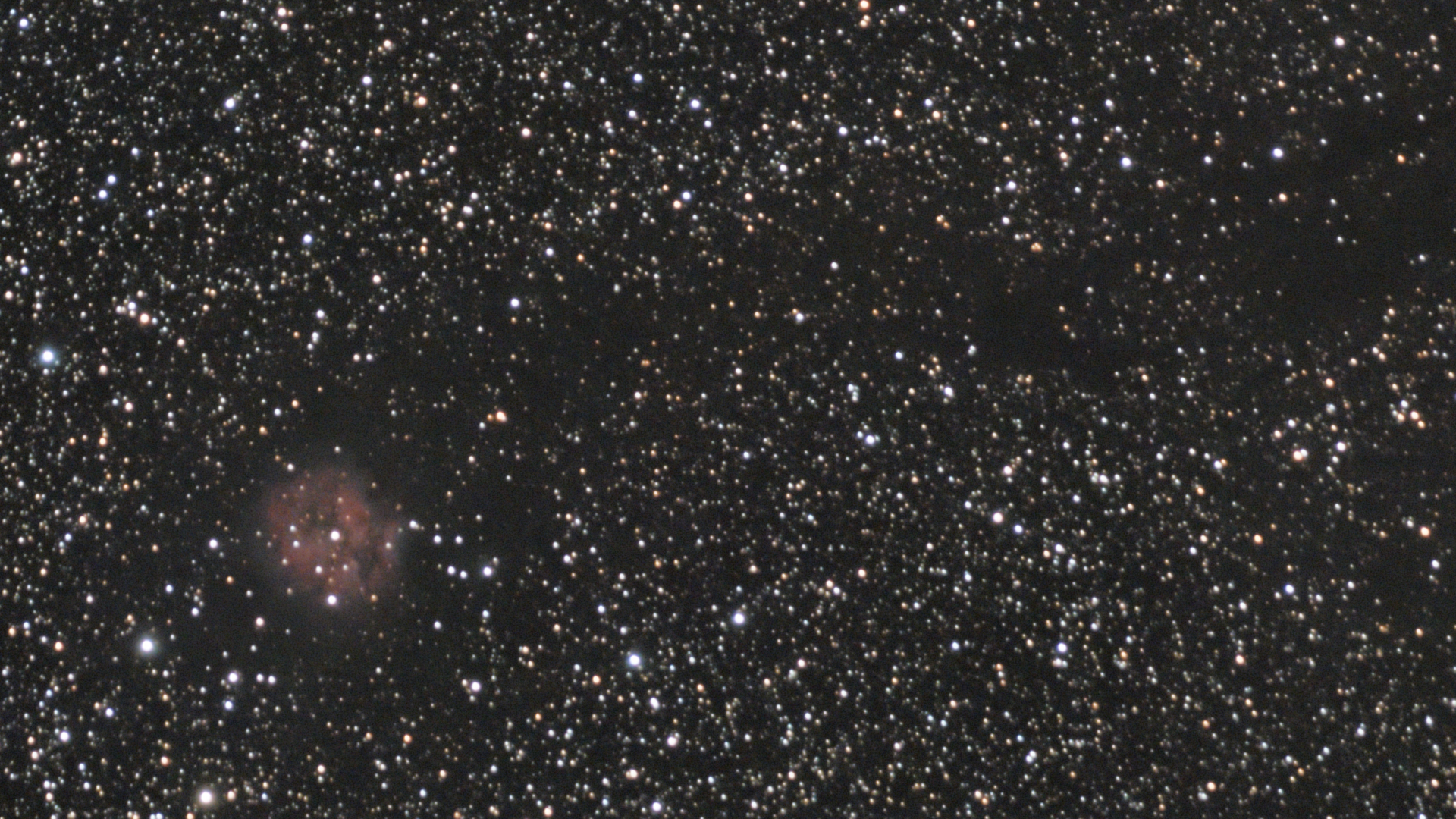
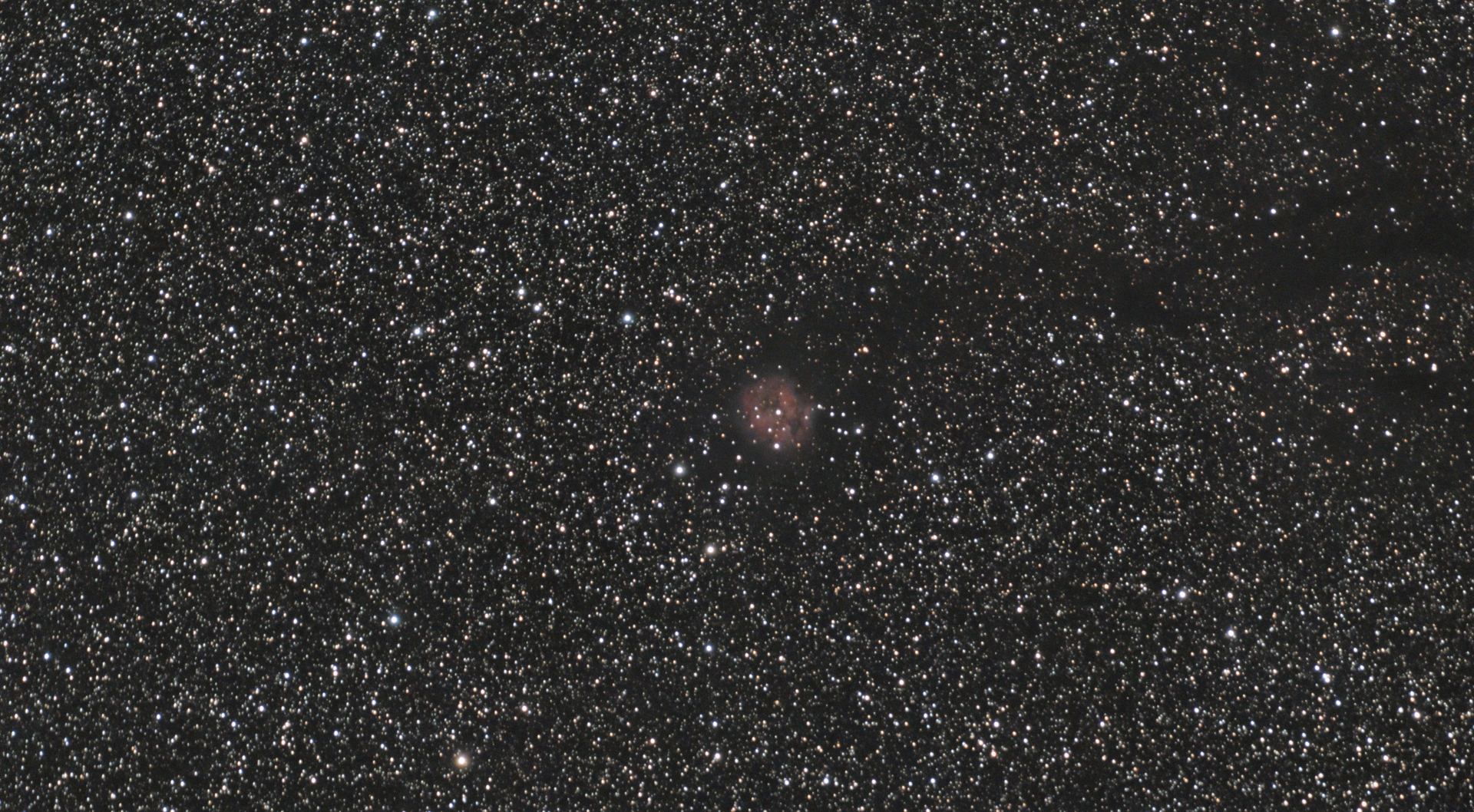
The image above is a cropped version of the much wider view shot by the telescope. The image below better illustrates the number of stars surrounding the area of the nebula. Where did all of those stars come from? That region is part of the Orion-Cygnus Arm of the Milky Way Galaxy. Galactic arms are regions of dense populations of stars, gas, and dust. The Solar System is located on the edge of the Orion-Cygnus Arm.
The visitors (now club members!) who wanted to see the scope also wanted to see the Andromeda Galaxy. Unfortunately, the galaxy didn’t get high enough in the sky for decent viewing until after they left. So, toward the end of my time at the observatory, I slewed the scope over to Messier 31 and captured about an hour’s worth of images:
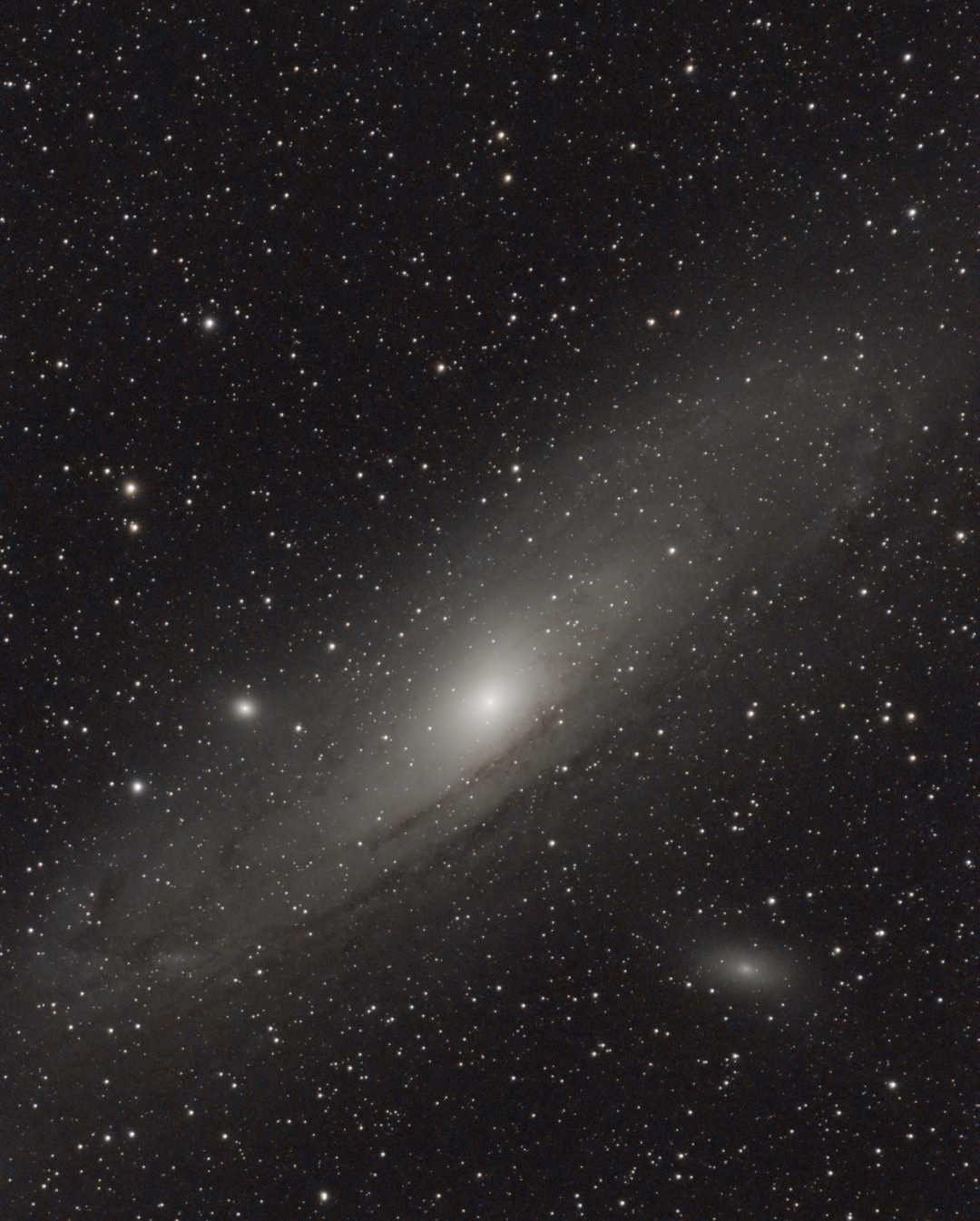
The galaxy is a little wider than the scope’s field of view. I want to try creating a mosaic image of the Andromeda Galaxy late this summer or in the early fall.


1 comment