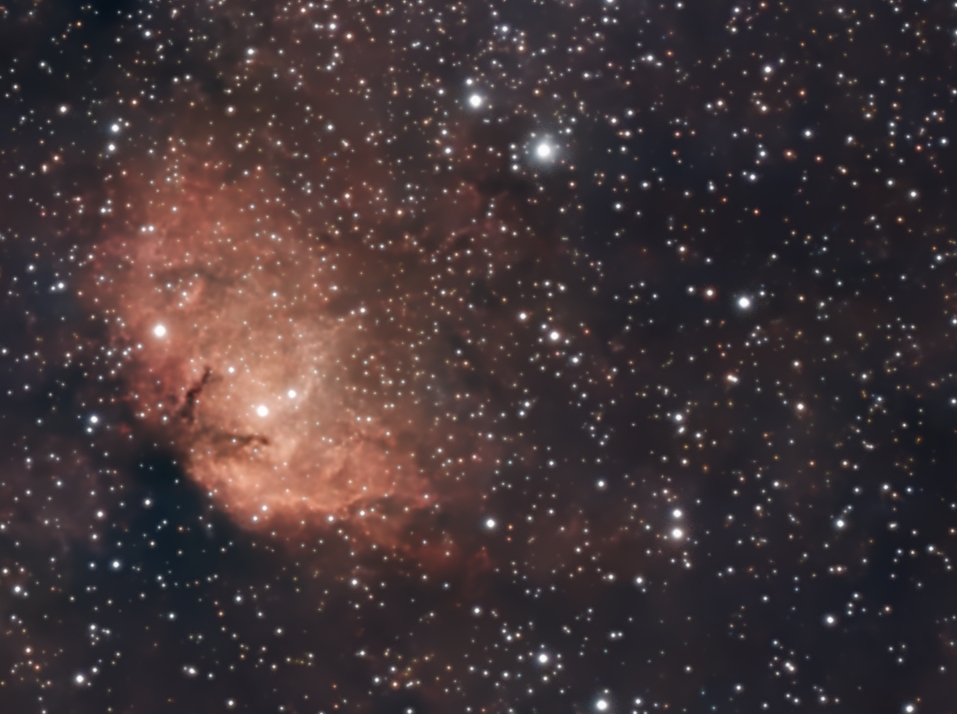
Tulip Nebula
The Cygnus constellation is full of interesting objects and is one of my favorite parts of the sky to explore. Among the many nebulae located in this region is the Tulip Nebula, which is cataloged as Sharpless 101 (Sh 2-101). I chose this particular target because tulips are my wife’s favorite flower.
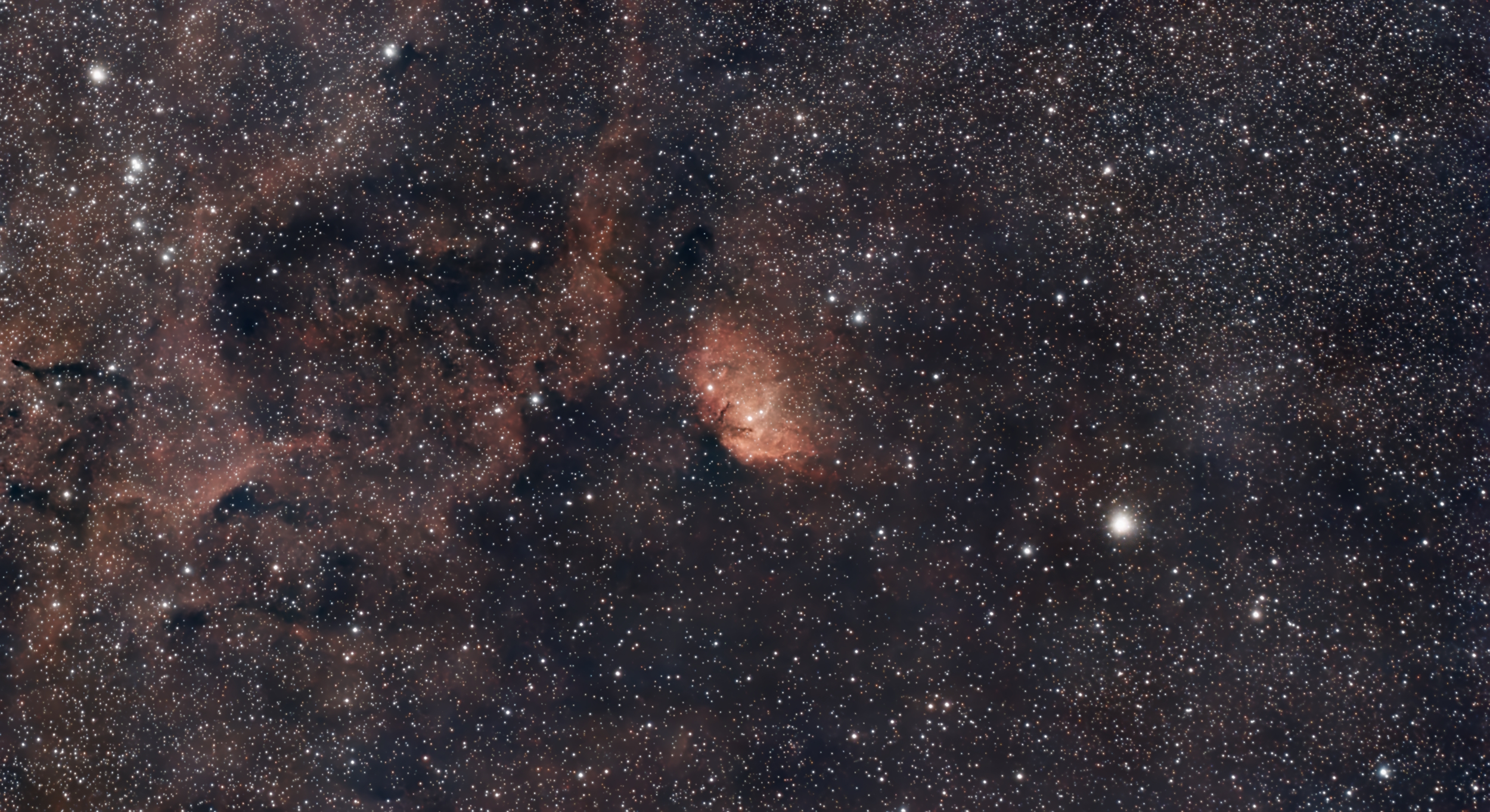
The image above also features clouds of glowing gas and light-obscuring dust along the plane of the Milky Way. The Tulip Nebula is located about 6,000 light years away within the Orion-Cygnus spiral arm, which is the same spiral arm that is the home of our solar system.
Also visible in the image (or not, depending on your point of view) is Cygnus X-1, one of the first objects confirmed to be a black hole. Geiger counters mounted on a rocket during a test flight in 1964 detected bright X-ray emissions that were traced to the star HDE 226868. Further study revealed that the X-rays were being produced by super-heated matter from the star as it fell onto a very massive, compact, and invisible companion. By 1990 it was conclusively determined that the invisible companion was, in fact, a black hole.
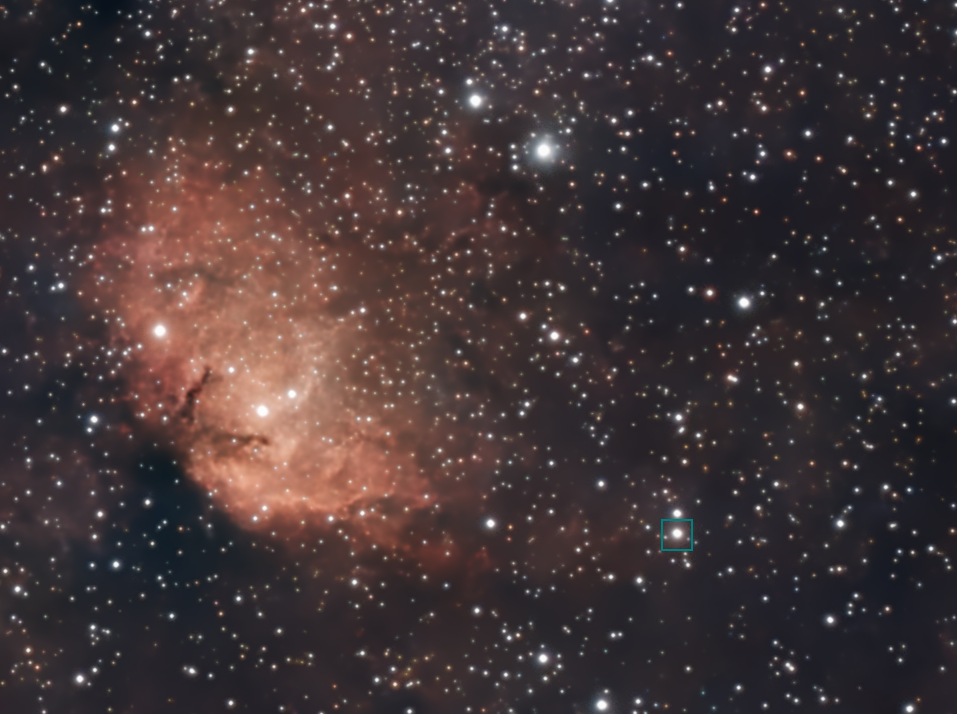
A bow shock created by one of the relativistic jets generated by the black hole is visible in some images of the Tulip Nebula but was too faint for my equipment to detect given the visibility conditions.
Click on the link below to view the full-size version of this image:

Leave a Reply