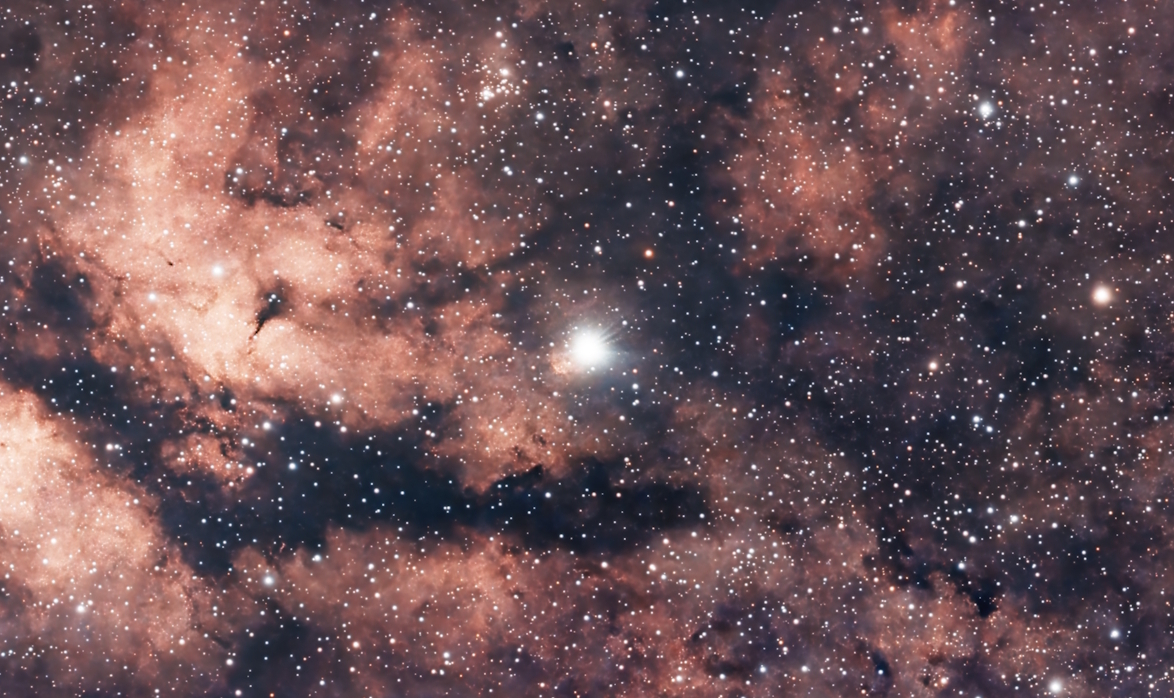
Sadr Region
A family member is celebrating a birthday soon. Her middle name is Celeste, which means “of the sky” or “heavenly.” Of course, I clicked on that fact as soon as I heard her name for the first time.
Hoping to encourage future interest in astronomy and other science stuff, I thought an astroimage done in her honor would be appropriate.
I chose the area around Sadr (SAY-der), the Heart of the Swan, in the constellation Cygnus as the target.
But a single imaging session wouldn’t be enough. This project would require stitching together images from multiple sessions, much like my most recent image of the Andromeda Galaxy. The mosaic below was compiled from 15 separate images taken over the months of May, June, and July 2026. The contrast is optimized for printing, as this was intended to be framed.
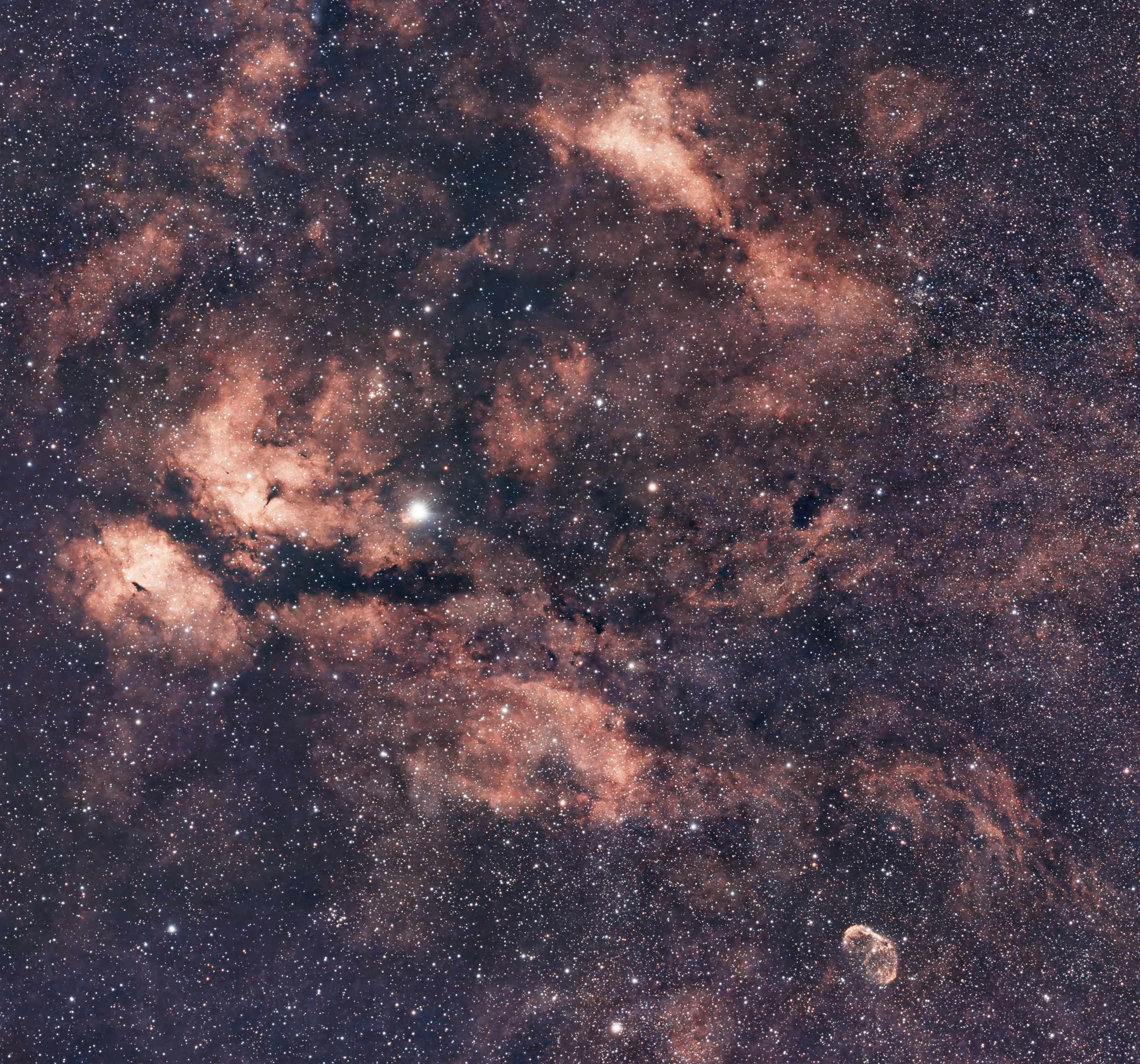
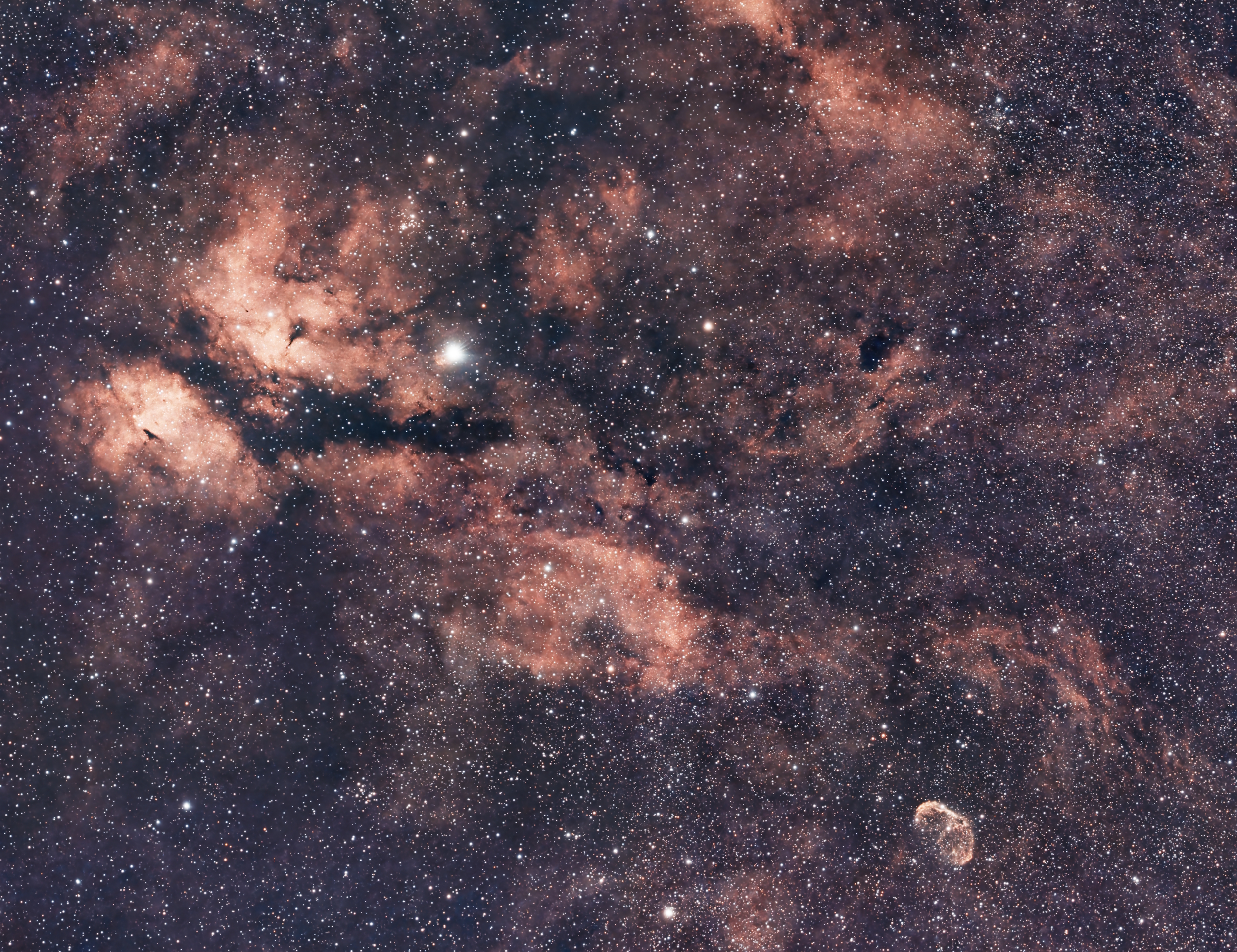
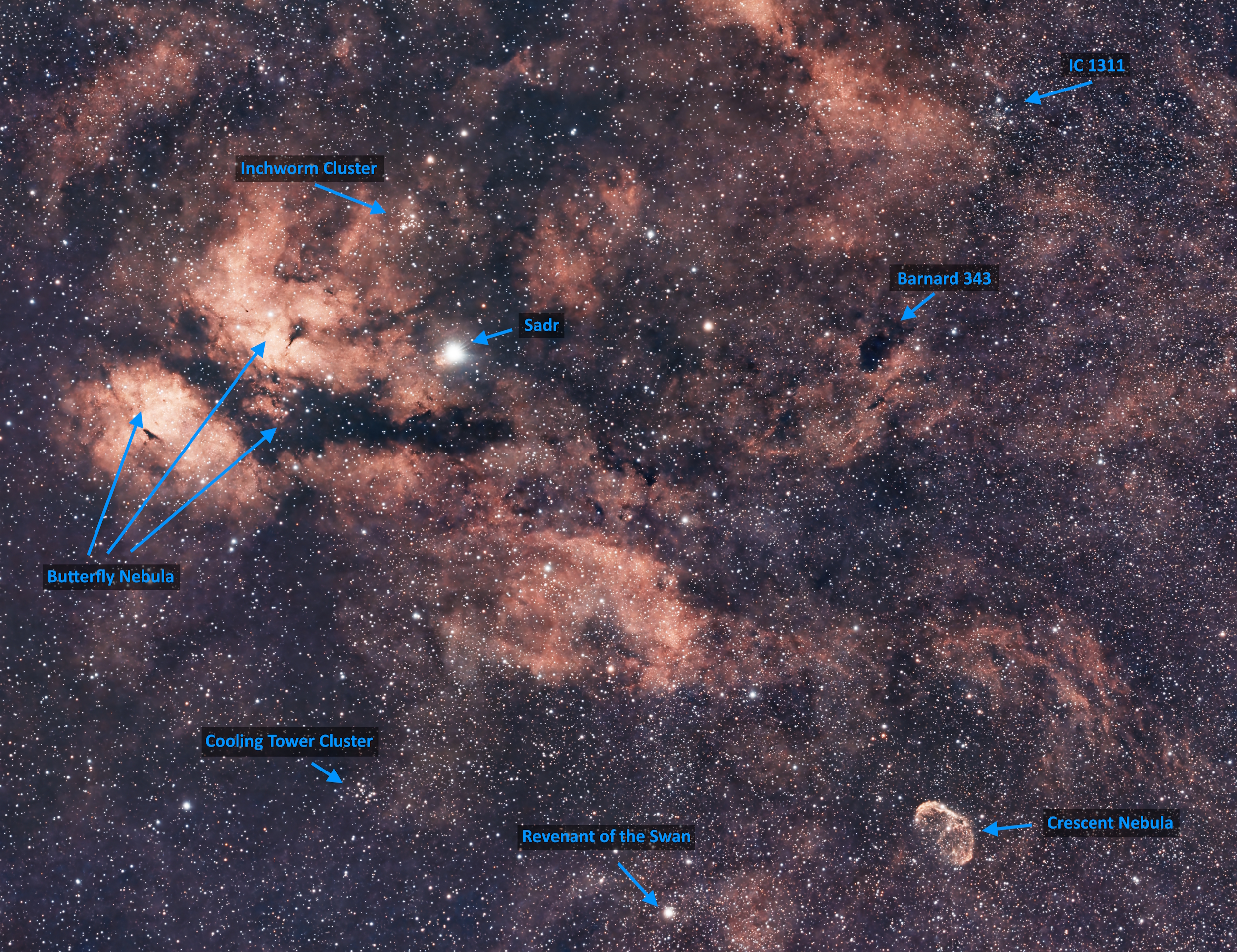
Sadr and the surrounding area lie along the plane of the Milky Way. The entire region is full of glowing emission nebulae dotted with dark absorption nebulae, as well as many pretty open clusters. I included the annotated image below, along with an explanation of each object, inside the frame.
The brightest stars in Cygnus, the Swan, have been identified as a distinct constellation by different civilizations for many thousands of years. The names and mythologies associated with it vary, but the modern depiction of a swan comes from several stories in Greek and Roman mythology. The name Cygnus comes from the ancient Greek word for “swan.”
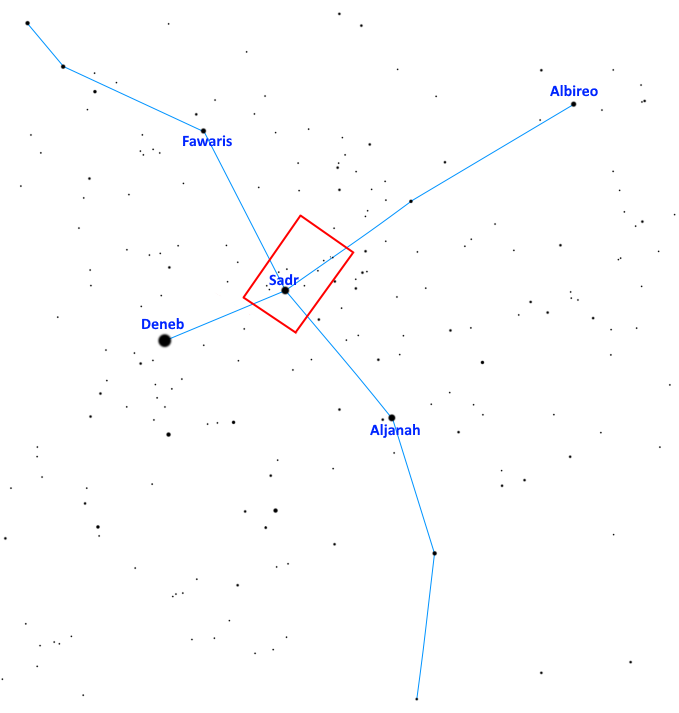
The five brightest stars in Cygnus are named Deneb, Sadr, Aljanah, Fawaris, and Albireo. They make up an asterism called the Northern Cross.
Sadr is the second-brightest star in Cygnus. It is located at the center of the Northern Cross. Its name means “chest” in Arabic, but it is often referred to as the “Heart of the Swan.” Below are details on the various objects labeled in the image above.
The Crescent Nebula is an emission nebula formed by the stellar wind of the Wolf-Rayet star WR 136. Fast “winds” of matter coming from this star collide with surrounding gas, forming the Crescent’s shape. Radiation from the star causes the gas to glow.
Barnard 343 is an absorption nebula cataloged by astronomer E. E. Barnard in the early 20th century. In telescopes, Barnard 343 appears as a conspicuous dark patch against the densely packed stars of the Orion-Cygnus Arm of our Milky Way galaxy.
IC 1311 is an open star cluster. It was discovered by British astronomer Thomas Espin in 1893. The stars of this cluster are located within the rich nebulosity of the Sadr Region, or somewhere behind it.
The Inchworm Cluster was discovered by the famous British astronomer William Herschel in 1786. The brightest stars in this cluster look like the outline of an inchworm caterpillar when viewed at high magnification.
The Butterfly Nebula is a combination of emission and absorption nebulae that resembles the shape of a butterfly. It’s up to the observer to imagine where the butterfly’s wings end—they can extend all the way to the far right of this image!
The Cooling Tower Cluster was discovered by French astronomer Charles Messier in 1764. This small open cluster is named “Cooling Tower” because its brightest stars resemble the outline of a power plant cooling tower.
The Revenant of the Swan is an interesting variable star that has been observed to brighten to as much as 600,000 times the brightness of the Sun! (It didn’t appear that bright to the naked eye because the star is very far away.) The last time this was recorded was in the mid-17th century, but there is evidence that people recorded this phenomenon 900, 2,100, and 20,000 years ago. It has been growing slowly brighter since its last outburst.
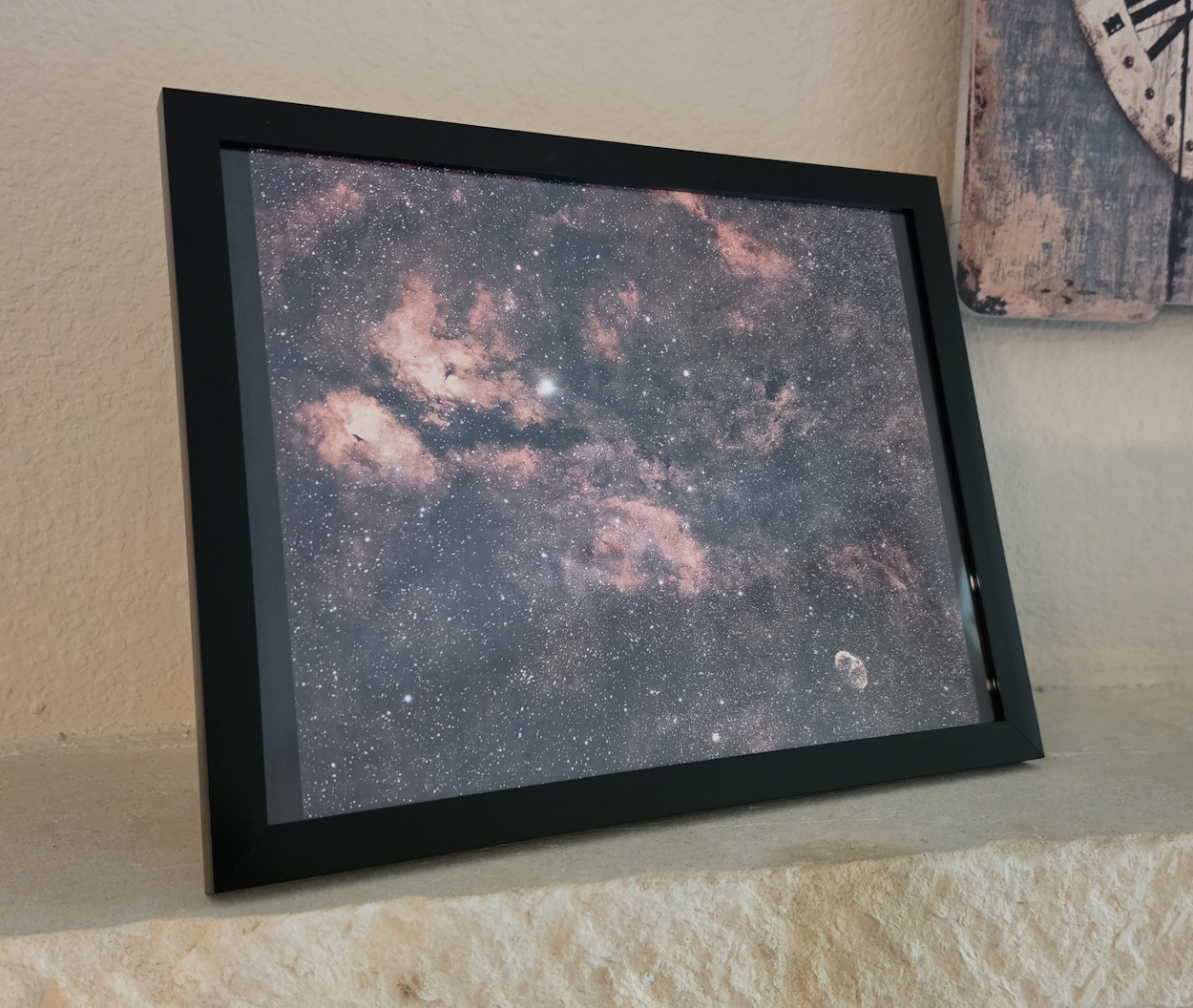
The cropped and annotated images, description of the objects, and a personal note are included in the frame.
I learned a lot from this project, especially in regard to targeting technique when collecting the individual images. Another project is in the works and, weather permitting, will be completed soon.
Click on the link below to view the full-size version of this image:

Leave a Reply